The story of the Tec-9 begins with a Swedish company called Interdynamic AB and their designer Göran Lars Magnus Kjellgren designing a cheap and simple submachine gun for military use. It found no interested clients, and so the company decided to market it in the United States as a semiautomatic pistol. Kjellgren moved to the US in 1979, anglicized his name to George Kellgren, and founded Interdynamic USA with a partner, Carlos Garcia.
The pair produced a few dozen MP-9 submachine guns in 1982 (they were all transferrable, as this was before 1986) as well as a semiauto open bolt version called the KG-9 (Kellgren-Garcia). About 2500 of the KG-9s were made before later in 1982 the ATF determined that it was a machine gun, and they had to redesign it as a closed bolt semiauto, which they named the KG-99. At about this point Kellgren decided to move on to other plans, and he sold his interest in the company to Garcia, who formed a new company called Intratec. Kellgren used the proceeds to start Grendel a few years later.
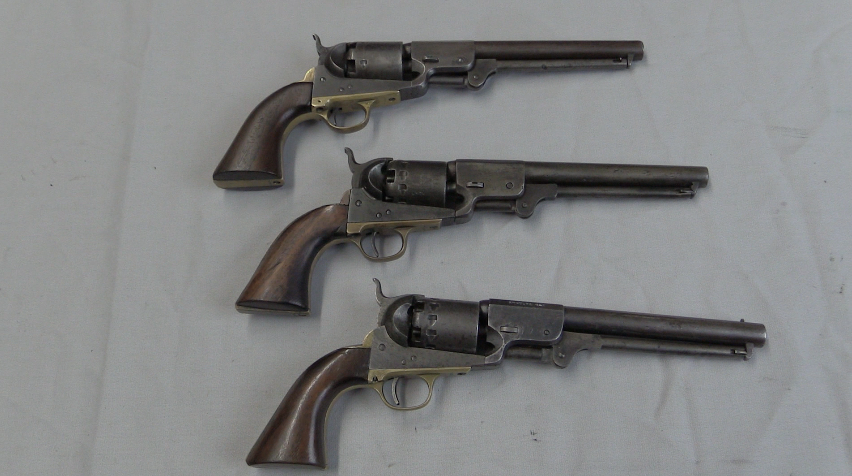
“Interdynamic MP-9(…)”
Wait. This looks suspiciously similar to RUGER MP9 https://modernfirearms.net/en/submachine-guns/u-s-a-submachine-guns/ruger-mp9-eng/ introduced in 1990s. Did they fight over that name XOR both sided agreed that MP9 (no dash) and MP-9 (with dash) are totally different names?
Due to all the bans list (for which they often changed names), I think name issue between the 2 was moot
Update it to 5.7mm, start calling it a PDW, market it for drone defense. Maybe make a snazzy chest holster.
Ironically, while the KG-99 variant was seen in the pilot episode of “Miami Vice” (apparently the type’s American TV debut), in the slightly later first season episode “Cool Runnin'” what were described in dialogue as “Tec-Nines” were in fact Star Z62 SMGs.
https://www.imfdb.org/wiki/Miami_Vice_-_Season_1#Interdynamic_KG-99
clear ether
eon
Eon I have a question, its not relevant to this gun especially; but, .50 Browning machine guns apparently burn enough powder to “Deliver the performance they do” but waste a good amount, while also delivering said performance and not blowing up. Would burning from from the front of the charge, possibly be better or worse in respect of the above? Or is it hard to quantify… Just thinking about tank shells, I suddenly thought, I have accidently thought of a way to instantly burn all the “Powder” from the side of it, all of it “Said powder, propellent” at once, theres a scale issue, which is why I jumped to big rounds… But is that less hard to quantify type thing – To me it sounds better, in theory but is it, type thing, more boom, less burn or is that a bomb? It does involve nitiol but in a…
Stucture. But in principle, you know the non bomb part.
It does potentially, mean lighter rounds, er a compressive ignition cococoon; which acts possibly as a form of API but to case, strength… Squish like, boom.
Said boom, would need to open the squish… The “API” part.
Hope that sort of made sense, er… A “case” within a case that detonates “Powder” 360° the length of the charge at once, by a method of ignition caused by constriction, I thought maybe the constriction of the expanding charge via ignition per se, could aid case strentgh, because of the API type thing it’s squishing while it wants to expand. Just came over me, I came up with potential structure years ago, but just then I thought of that.
Probably quite hard to get what I mean, er… So years ago I came up with an expanding trellis, a tube to make a bigger tube; body armour sleeping bag, I know, quite. Anyway, it evolved into, all sorts of uses, aside from it’s original one, but what made that possible in theory was piezo igniters (In cig lighters, scale.) right, aye, and
nitinol, aye… Why/how? Well the princple is six steel rods think gatling gun barrel arranged, then you slip over a number of expanding /\ shaped bits, each is hinged “Expands” creates a bigger tube, aye; immense. But, I thought well if you put aload of cig lighter bits in the right place, each will get squished, then if you add nitinol, the squish will charge the wires and make them contract, thus breathing (Developed into a sort of jellyfish drone idea, breathes for movement.) Aye… Anyway, latest iteration as of 5 mins ago is expanding, with bang “Within a brass case” but then, contracting heat/even without the leccy charge to constrict the expansion, and thus “API” the bang if you, so it goes ploooomp! Out the barrel.
Well I know what I mean, sort of, but the orignal questions stands, burn or boom, how do you work it out…
But you’d need the piezo igniters to ignite the charge 360° throughout its length… Aye. But might be something in just the constriction also; heavy .50bmg rounds. Might not be, but thought I’d mention it; to me now, I can see it – Fire it, boom, expands circle, triggering piezo igniters which do the nitinol to contract against the boom, forcing a pop 》 that way, muzzle. Meh, made sense to me’ish.
“Front ignition” has been one of those things that ammunition makers have pursued for over a century.
Several European sporting cartridges (notably the vom Hofe designs) and a couple of American ones (the Ballard “Everlasting” types) were initially designed for “front ignition”.
The usual method was to have a narrow (think 2-3mm ID) steel tube attached to the primer pocket, to direct the primer flame straight up the center of the cartridge interior to just behind the bullet base when the bullet was seated at the correct depth. This was supposed to ignite the powder charge from the front end, resulting in a solid fuel rocket “grain” -like burn giving higher final velocities with lower pressure peaks.
In fact it never worked, because unless the cartridge was loaded with a low-density, high-volume propellant (i.e., black powder or semi-smokeless powder), there was rarely enough in the load to fill the cartridge case.
And since people do not generally fire their rifles straight up, gravity tends to position the powder along the lower side of the case lying in the chamber.
The result was usually erratic ignition and powder burn, resulting in wildly variable velocities and thus trajectories. The exact opposite of what was wanted.
With smokeless powders, there is no real advantage to “front ignition” and a considerable amount of aggravation working around it.
That being said, “front ignition” will likely have a future with Plastic-Cased Telescoped Ammunition (PCTA), especially if loaded with liquid or gel-type propellants derived from liquid-fuel rocket monopropellants.
Such propellants ignited electrically by a “band” of metal like nichrome sintered into the case during moulding would speed up rate of fire in something like an automatic cannon by eliminating the mechanical “dwell time” of percussion ignition.
In the most ideal form, Combustible Plastic-Cased Telescoped Ammunition (CPCTA), front ignition would help ensure that as the plastic case “burned” at a slightly slower rate than the liquid propellant, from a side view it would appear like a candle burning down from the top, in this “case” the front end. Meaning, the case would maintain breech seal obturation until the end of propellant burn and a few picoseconds later.
You would still get much higher velocities than with any conventional propellant powder; such monoprops have much higher energy in terms of kCal/mole than even the best conventional smokeless powders.
This would be a nearly ideal arrangement for a Very High Rate Of Fire (VHROF or just VRF) automatic weapon, such as an aircraft cannon or, conversely, a low-level air defense weapon.
I have doubts about being able to put an effective anti-aircraft laser on anything much smaller than a Main Battle Tank. You’ll likely need a small nuclear reactor system to power something like that, so it’s not going into any vehicle that isn’t (A) heavy enough to not notice the mass (meaning about 50 MT at the lower limit) and (B) heavily enough armored that a “golden BB” won’t result in a nuclear “accident” due to containment breach (even a pebble-bed system could spread radioactive nodules around if properly hit.)
For lighter, more mobile FAAD vehicles (I’m think equivalent to Gepard or the old AMX30 DCA, i.e. under 35 MT combat weight), a Gatling-type 30mm VRF gun system firing CPCTA loaded with liquid or gel monoprop “powder” might rewrite everything we think about persuading the other guy’s CAS to go away.
Just IMPO for what it’s worth.
cheers
eon
Thanks EON, will read that again, mind… Me being abit, slow or something, He he. Anyway, thank you for sharing your knowledge.
If anyone wonders why I started that now, fn90 mag reloadable baker rifle cartrides with self contained mule ear type igntion. Aye. Maybe the above seemed, easier, he he. Hey, price of rounds in the U.S. Might sell… If it worked, well, enough.
Suppose my question to Eon was dreyse in some form forward igniton, vs bottom, vs potentially 360° instant ignition…
Another potentional use shear force fluid, armour, the incoming force exands the tube “It then does the shear thing” try it, make you own tubes, I try to protect you from these Terminator mofos don’t I; good reason me a my Dad beat the arcade game in about 1996. Ok after about 20 quid, but still.
Was dead ten year later; fit bird “My Mum” divorce, meh. Hee… His anti T2 legacy lives on. Was a lovely fella, tut.
“(…)tut.”
Explain clearly why you summon Tampere University of Technology.
Tut; English, TUT! mouth noise, sort of a cough, er… Vocal head, scratch?
https://youtube.com/clip/UgkxATxBXJF9KxHD4x3NiwJ9JfnMOy9X8nB5?si=QxnBTCL2dSTPLJkw
Incase you was born after 1996, lots of people have been, he he.
@Pdb,
You raise some interesting questions about propellant combustion. If you consider the conventional “back primed” cartridge, you have to acknowledge that such an initiation point for the deflagration of conventional propellants is going to result in the unavoidable expulsion of some part of the powder charge rather than a complete change of state from solid to gaseous. Which explains the whole “flash” process you have to deal with via the usual techniques… After a bit you realize that each and every fired projectile is going to include a hell of a lot of wasted propellant, simply due to the fact that it’s burning back to front.
If, as you propose, you initiate the deflagration process from the front to rear, then there should be a lot less wastage. The trick, though, is how to accomplish such a technical feat. Dreyse did it, but that was accompanied by a lot of mechanical and physical issues that were never really satisfactorily solved.
I might suggest that such a technical development might not be worth the effort and cost. You could, perhaps, also go towards a hollow monoblock of propellant that burnt from an interior channel akin to your usual solid fuel rocket. This might serve the purpose, but… Again, is it worth the added effort and expense?
Sometimes the imperfect is the optimum solution. Consider the expense of doing a solid propellant charge and then loading that into a cartridge. How do you do that, economically, and manage to do that in a bottleneck cartridge?
The whole thing rapidly becomes an exercise in affordability, I fear. Remember the mantra? “Better is the enemy of good enough…”
Today’s cartridge/propellant tech is the result of a few centuries of practical iterative optimization geared towards affordable mass production. We might want to take note of that fact before proposing marginal improvements that would prove to be expensive to implement…
See what you mean, aye but boom or bust… Rest of the economy relies on it, ok BOOM! Say 360° detonation in an instanstant, sounds less of a propellent and more of a bomb… Type thing. Need to find out more about nitinols compressive nature, I do; as on the face of it, I can see API in that the “explosion” is counter acted by the retraction, as in API BANG!!! Bullet fires, bolt moving behind it still dampens recoil. Thinking polymer shells I think, something lighter…
Might be nothing to it, my much vaunted solution to all of lifes ills – Nitionol, is nothing. But no, can’t be done; I would need to attach a key on a wire to some Turkeys in a lightening storm, otherwise no, can’t prove it to myself.
“(…)how to accomplish such a technical feat(…)”
Already done in Benelli CB-M2 https://modernfirearms.net/en/submachine-guns/italy-submachine-guns/benelli-cb-m2-eng/
Hmmm… Sort of’ish… Anyhoo all good.
Hmm… They’ll be things “Things” we aren’t doing, but could… Without the “need” would, thus maybe; no should… Maybe. But stuff/things… Things… Worth keep thinking about, anyway, incase, we should and could and would have but didn’t, speed it up like; if we ever wanted to for whatever reason.
https://youtu.be/Nq_X1AcXwZY?si=1j_wOM9a7TNzE8Rm
Look at that Harpsicord, something else that isn’t it.