When the German Tankgewehr was introduced in May 1918, the first 300 or so guns were of a different pattern than the standard production that would follow (and of which about 16,000 would be made). The Kurz model had a barrel about 4 inches shorter than the standard, and was about 2 pounds heavier, because that barrel (although shorter) was much larger in diameter than the standard pattern.
Uncategorized
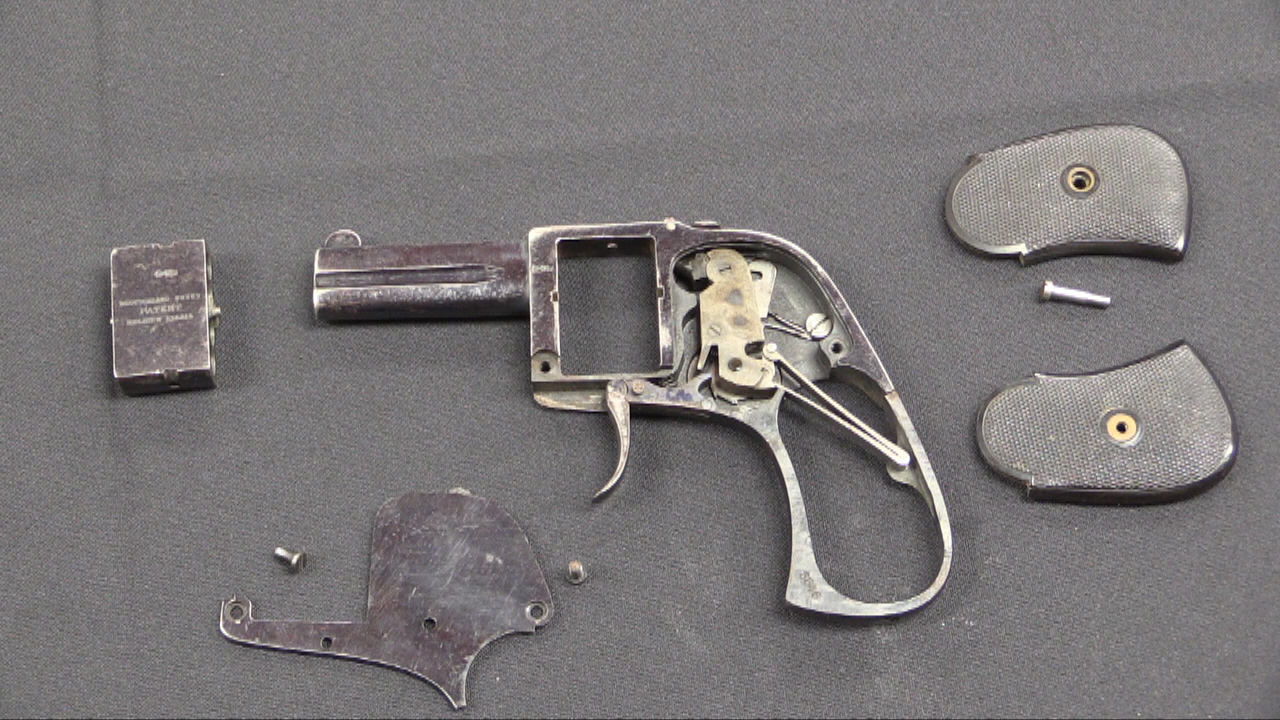
4-Shot Bär Pistol at RIA
The Bär pistol was designed as a compact gentleman’s defensive arm with a number of interesting features. These include twin barrels and a “cylinder” or chamber block, which held 4 cartridges in a single column, […]

Semiauto Rifles
Mauser Gewehr 41(M) Manual
Last week, we posted a video on the Gewehr 41(W), which was the first really mass produced German self-loading combat rifle. Well, when the Heereswaffenamt (German ordnance department) requested designs for what would become the […]
Bolt Action Rifles
The G40k: A German Experimental Mauser Carbine
This is lot #1635 in the upcoming RIA Premier Auction. It was scheduled for April, but has been postponed – check their web site for upcoming Online Only auctions every month, though! In April 1940, […]
Awesome find! I don’t want to shoot one, but cool to behold!
I guess that suspenders are preferred when shooting one of these baby cannons.
This Kurz marking is puzzling. When was it applied?
It could not be when these rifles were first made. They could not be short if there is no long ones.
It only make sense to have been marked on those 300 first short rifles when the “standard” long rifles appeared.
But why those later ones were not designated Lange instead?
That’s confusing, but I am not German.
“(…)But why those later ones were not designated Lange instead?
That’s confusing, but I am not German.”
Maybe the late pattern was not considered “long” but rather “normal” and then if it is default there is not need to inform about that?
I wonder if the extra two pounds of mass would have noticeably offset the notorious kick of these guns.
Come on…
Not such a terrible recoil.
https://www.youtube.com/watch?v=_ovHGvT4f9k
I suspect that the change to the front of the spring flange on the firing pin, is similar to the same feature on Mauser 98 rifles.
The lugged attachment for the cocking piece caused stress concentration.
Some of the military drills involved a lot of dry firing, eventually resulting in fatigue fracturing of some firing pins at the cocking piece connection.
The shaped front matches with a slot at the front of the bore of the bolt – when the bolt is locked.
It will prevent the firing pin from reaching a primer, if the pin breaks before the bolt is locked.
It’s one of the many safety measures hidden in plain sight in the mauser 98.
Interestingly, the arisaka like cylinder style of firing pin in the steyr and obendorf prototype upgrades of the mauser 98, along with the Mukden Mauser, do away with the seperate cocking piece, and the cushioned firing pin blow and the stress concentrations that occur with the joint
And they also dispense with the out of battery safety system on the front end of the cylinder portion of the striker,
With the risks of the striker separating being greatly reduced, the cocking cam notch and cocking cam can adequately prevent out of battery firing