
Today I am concluding our series on the standard-issue Lee Enfield system with the No5 MkI – the “jungle carbine”. Developed in 1943 as a shorter and handier pattenr of rifle than the No4, the carbine went into production in 1944 and saw use during World War Two. It featured a number of lightening cuts, as well as a shortened barrel, conical flash hider, side-mounted sling, 800-yard sights, and rubber buttpad. Unfortunately, the No5 was beset by a problem of “wandering zero”. A significant number of the rifles failed to properly hold zero when they were widely issued. The problem was never fully resolved, but appears to have been the result of receiver flex due to the lightening cuts. Efforts to fix it were essentially abandoned, as it was recognized that a new self-loading rifle was going to be adopted soon, and it would be a waste of time and money to continue development of the Lee Enfield by that point.
Heavy MGs
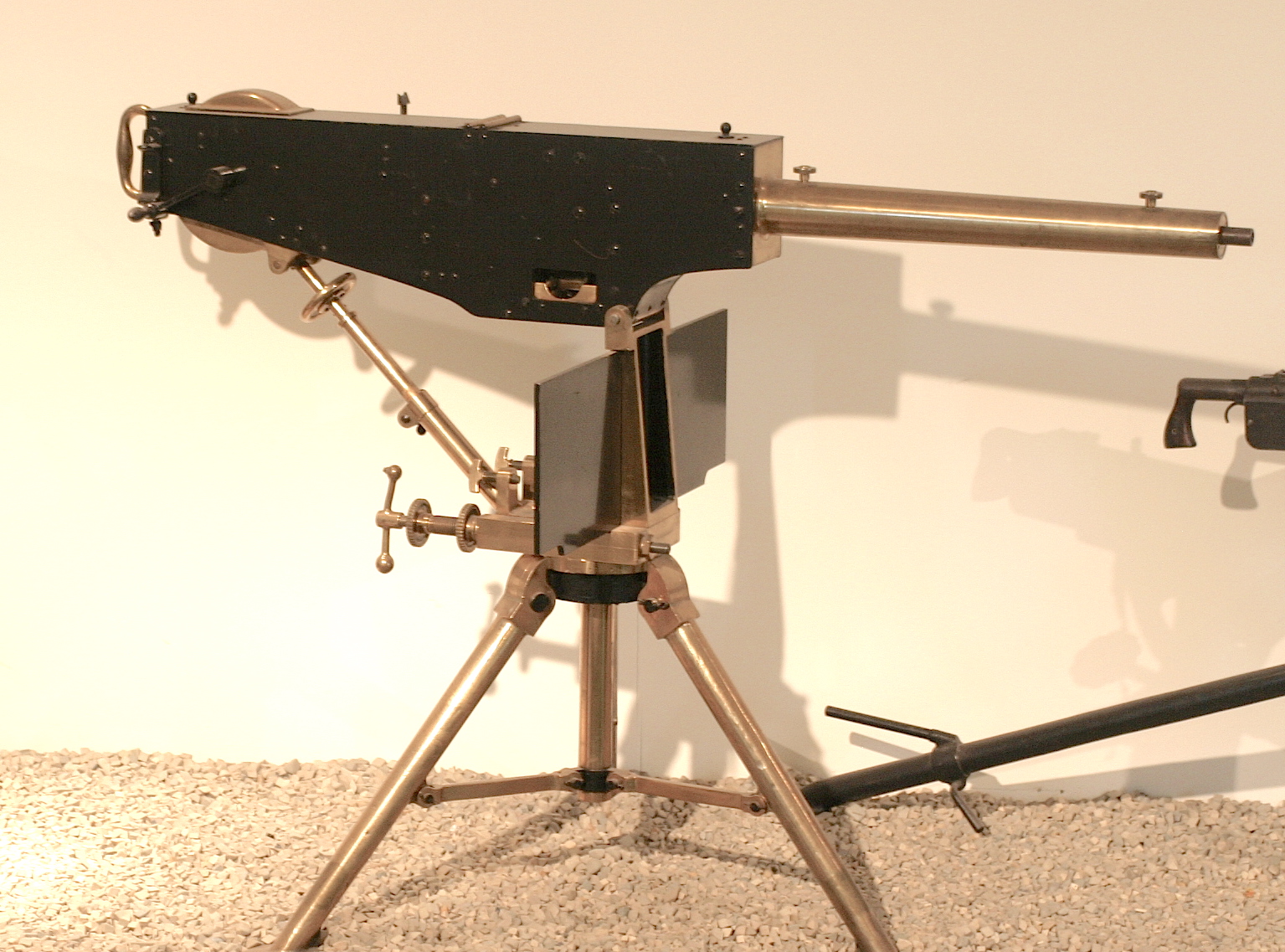
The First Maxim Machine Gun
I am going to start an intermittent series of posts on the various different types of Maxim machine guns over the next few months – there are a whole slew of them, and I have […]
Submachine Guns
The Sneaky Silent Sten MkII(S) at the Range
Today we are taking an original Sten MkII(S) out to the range – something I am excited to be able to do! The suppressor on this Sten is all original, and about 80 years old…and […]
Slow motion
ZX-7 American Sterling at the Range
Today we are taking the ZX-7 (essentially a Sterling SMG in .45 ACP) out to the range. It runs rather faster than I initially expected, but isn’t too hard to handle…
Great video sir. Thank you.
Ian, turns out your robotic relatives are quite distracting. Hopefully you can introduce them in a future video, I bet they can take the recoil of the No 5 quite well.
Thank you so much for explaining the precise findings of the wandering zero, as well as the fact that it did not affect all rifles. One wonders if the Brits were so certain about the rear receiver scallops why they simply did not add those few ounces back to the receiver & carry on production – or was it they only suspected that was the problem, but they couldn’t quite nail it down?
so it did exist, but it was also a convenient excuse to ditch it for an em2 or slr.
Imagine those little irons surplussed and sold to an enterprising dealer who could convert them to .280 Enfield. Civilians would have lapped them up even if the zero sometimes went AWOL.
The “wandering zero” was found to be a half myth concocted by SOME soldiers who experienced the problems of barrels and stock-nodes not matching up when final assembly of rifles was done half-baked. The rifle design didn’t produce a “wandering zero.” It was BAD manufacturing that did the thing.
It will definitely leave a mark on your shoulder.
I have a Rifle No. 8 (.22 LR trainer) built in 1949 on a No. 5 receiver.