Yugoslavia never received a technical data package or license for the AK; they reverse engineered the system themselves in the 1960s. In the process, they created a version of the AK noted for its ruggedness. In addition, they added a number of features to facilitate rifle grenade usage. Over the course of many iterations the rifle remained designated the M70, leading to a lot of confusion about what models are what. Today we are going through the whole series of changes.
M70 – Original milled receiver, with bolt hold-open, fixed stock, and screwed-in barrel
M70A – Underfolder version of the M70
M70B – Milled receiver, pinned-in barrel, standard magazines, fixed stock
M70AB – Underfolder version of M70B
M70B1 – Stamped receiver (1.5mm), bulged trunnion, fixed stock
M70AB1 – Stamped receiver (0.9mm), flat trunnion, underfolder
M70AB2 – Stamped receiver (1.5mm), bulged trunnion, underfolder
Thanks to Zastava USA for making this video possible!

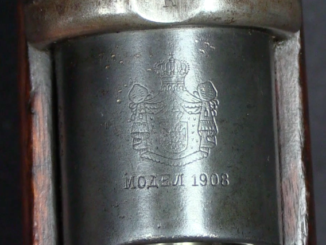
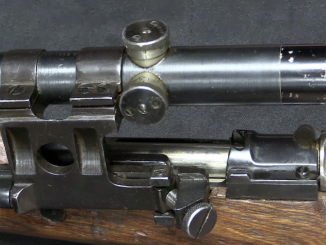
Erm, and while the Yugo were huffing-and-puffing over the M66 AK, what rifles did the Yugo Army had? Are you like totally sure M70 was the first chambered in 762×39 and firing rifle grenades?
I don’t think so. Nope, the army rifle at that time was the SKS, or PAP 58 rifle which was the really first Yugo weapon in 762×39, and the palpable token of detente between Yugoslavia and the rest of the Soviet Bloc. AND, in its PAP 58/66 variant this was the first weapon to introduce the rifle grenade capability (other than 1000s of captured German Gewehrgranatgeraet (GGG), able to top each 98k weapon (including the Yugo first postwar infantry weapon the M48 short-action Mauser by Preduzece 44 (aka Kragujevac). Then the PAP came up with screwed-on grenade spigot, together with the combined gas valve / grenade sight, that later came hook, line and sinker for the M70.
First rifle grenade capable rifles were M48s, in 1951. RG attachments and AT grenades were ordered from MECAR. US also delivered some M9A1 rifle grenades at ~same time.
M59 initially was not capable of firing rifle-grenades, only M59/66 (which was first really mass produced version, only IIRC 3000 of base M59 were made) introduced that ability, as FN RG attachment was only capable of being mounted on Mauser type rifles).
PS. German WW2 rifle grenades were all gone by the mid-’50s, as were other German AT weapons like Panzerfausts and Panzerschrecks. Reason for that was that explosive used in WW2 German shaped charges was not most stable and by mid-50s it was well past “best before” period. Only exception was artillery shaped-charge ammunition, in particular 75mm and 105mm Hl type shells which stayed in inventory until mid-60s which used different explosive composition and were hence more stable.
It would also be interesting to trace out just where the Yugoslav TDP for the M70 wound up, and why.
Iraq had tons of Yugoslav weapons and industrial technology that was purchased during the Saddam years. The Tabuk was based on the M70, as I recall, and there were extensive Yugoslav influences in things like bunker and palace design. The fingerprints were everywhere you looked.
Which, when you consider the extensive Soviet sponsorship in Iraq? It’s kinda odd; the late 1970s and 1980s when all of this was going on did not represent a period when Yugoslavia and the Soviets were particularly close, so… What the hell was going on? As well, there was a lot of pro-American sentiment (comparatively…) in Yugoslavia at the time, and you also have the “Dog that didn’t bark in the night…” in that the US never seemed to object or make an issue with the Yugoslavian government over their extensive involvement/support for Saddam, either.
There were also suspiciously complete blueprints in US possession for a lot of “Iraqi secret bunkers”, which were clearly not labeled in Arabic. You also didn’t hear much about Yugoslavia having any of its payments defaulted on, plus there was apparently some cross-communication going on with regards to the Gerald Bull Noricum long-range 155mm artillery TDP…
I’d love to be able to go digging through all the archives, just to satisfy my curiosity. Yugoslavia was a huge force on the international arms market, there for awhile. All sorts of interesting things flowed through Kragujevac…
Iirc, Iraq was also a member of “Nesvrstani” (non aligned) movement, which was a quasi alternative for 2 main US – USSR blocks. Yugoslavia led that third option, consisting of mostly a lot of dictatorship third world african countries, former colonies.
As for US not opposing all that involvement, its a funny comment, as in the 1980s Iraq and Saddam were heavily supported by US. However their dog quickly and not prudently broke his leash in 1990. so he was turned into a convenient “end of the millenium” enemy, not uaving any more big bad soviets.
I don’t know that Saddam was all that “heavily supported” by the US. It was more a “Yeah, we don’t see the Middle Eastern oil fields being overrun by the Iranians…” as a good idea, and once Jimmy Carter effectively gave away Iran to the Islamicists in a fit of utter stupidity, well… Saddam went from “Soviet client” to “Sponsored by Gulf Arab and everyone else that didn’t want Iran running the world oil market…”
Absent the Iran debacle, I doubt the US would have done much more with Iraq than it absolutely had to. It was a Soviet-sponsored state during most of that period, for what good it did anyone. I rather suspect that it cost the Soviets far more than they ever got out of it, much like Syria.
The one really strange feature of Soviet imperialism is that very little of it ever actually paid off for them, in anything other than very short-term ways. You could see the point of the Europeans going after colonies in Africa and elsewhere, because many of them profited from it. The Soviet Union, however? Good lord… You wonder how much better off they’d have been to simply have stayed at home and fixed up the existing lands they already had.
https://www.youtube.com/watch?v=h9DG0vZfmlU
Krah-goo-YAY-vock for Kragujevac. Short A always, g is always hard, e = long A sound, j = English consonant y. Similar to German.
Tsehr-vay-na for red. C = ts except with a diacritical mark, r is sort of a vowel, “er” sound, not unlike Polish.
The Balkans always were a mess.
“… the illusion that the Soviet Union was there to be your friend. No, the Soviet Union was there to enforce what the Soviet Union said you would do.” Tito discovered this during WWII when the Soviet “assistance” consisted of giving him orders while the Imperialist West, especially the famous ant-Communist Churchill, provided him with weapons, logistics and even troops in the form of Commandos, and kept every promise they made to him. As a doctrinaire communist Tito was leery of the West but had learned to also be cautious about Russia. He didn’t cheat the Russians, just treated them in kind.
A decade earlier, small countries in Western Europe re-learned the lesson in this in 1955 when the Russians invaded Hungary. One of Bloke on the Range’s associates mentions how this even kicked the Swiss into both re-arming and updating their arms, small and large, resulting in the famous StG 57 — all of which were capable of shooting rifle grenades.
Even earlier, in the Spanish Civil War, George Orwell noted that Soviet actions always contradicted Communist doctrine when Russian foreign policy took precedence; thus the betrayal of the various anarchist militias and eventually the German-Soviet non-aggression pact. The Communist party in France remained idle against the German invaders right up to the German invasion of the USSR.
not only the French communist party remained favourable to the national socialist invasion of France
CommIntern’s orders to all commies, was to remain positive towards national socialism, and to oppose the British war efforts against them.
it was only when Operation Barbarosa got going that the likes of Woody Guthrie received new orders to support the war
The FTP(formerly the French Communist Party) was the most effective and deadly of the various French resistance groups fighting the Nazi occupation. They put their lives on the line and many many of them were killed. Unlike the various right wing French groups who welcomed the Nazis and helped form the Milice, the fascist organization that worked hand in glove with the Nazis and murdered thousands of fellow Frenchman while others like de Gaulle hid out in England where it was nice and safe.
I say nothing against them once they got going — honor where honor is due. I understand they were undercut and short-shifted by the US and UK both during and after the war, for their politics!
In the interest of fairness, I point out that those who “hid out in England” did so with the intention of going back to fight, or as the fliers and sailors of France and many other occupied countries did, went to the UK in order to keep fighting. DeGaulle, as a public figure, could not have easily joined the underground in Occupied France.
Regarding your last sentence: so did the communist party of Yugoslavia – they only started the rebellion on 22nd of June 1941., the same day of beginning of oper. Barbarossa!
This was conveniently and agressively whitewashed afterwards, in redeveloping european communists like some prime and most important “antifascist” movement.
Sad remnants of such fallacies are seen today in Russia, especially during May; propaganda insanity apparently goes so deep that they/Putin accused collectively Ukraine of being “nazis” (?!) in 2022.
M70s launching grenades have a flaw that it quickly destroys the accuracy of the barrel, after less than a dozen grenades, something is substandard in barrel steel (for grenade launching at least). I wonder if the chrome lining of barrel was skipped of fear “grenading” would chip and destroy the chrome coating also.
On the other hand PAP m59/66 does not have such issue at all, grenades could be launched all day through it, with no ill effect.
Should do a companion video next on the M77. Similar progression, it went from a milled receiver on earlier production, to later being built with 1.5mm stamped RPK receivers. But also offered features like a folding bi-pod and fins on the barrel of the machine-gun variant. As Zastava has recently been importing newly made semi-auto versions to the US again lately, it would be also good to see comparisons or differences between these recent ‘commercial’ models and the original military versions used in Yugolsav and Lebanese wars from 1977 and forward.
No version of that gun was used during 91.- 95. in former SFRY territory
Not as ‘official’ issue, no. But it was used, unofficially – like so many other whatever-was-available firearms and depending on who was doing the using. Those in need for arms weren’t too picky.
Unfortunately, outside of fantasy flying pigs land, there isnt any photo or account of it, official or unofficial.
@Storm,
You do have to remember that the various former Yugoslavian expat communities were buying up weapons all over hell and gone, which they tried to smuggle into the conflict zones. I know for a fact that here in the US, there were people buying up things like the Valmet M78 and whatever else they could get their hands on. The “guidance”, such as it was, suggested strongly that anything the expats were buying should be stuff they would be familiar with in Yugoslavia, such that the AK-series semiautos here in the US were fodder for that.
Friend of mine was a dealer at that time, and the ATF was sending out circulars warning of what to look for, and we were also hearing things in the military intel community about stuff that was a lot like the old days when they were doing the same thing for Cuba. We had intel reports that small arms sourced from the civilian market in Switzerland were being sent into Yugoslavia, as well.
So, while it sounds ludicrous, it is possible. Vaguely. I know I saw pictures of a set of confiscated Valmet M78s with a bunch of magazines that were supposedly bound for the conflict zones… Which, when you think about it, wasn’t all that bright: 7.62 NATO in the former Yugoslavia wouldn’t have been that common a caliber, so… Why?
Any time one of these conflicts gets going which has a significant US expat community, weird things are likely to happen. I know one of the justifications that the Clinton administration used for the idiotic ban on the military maintaining small arms repair parts out in the units was that they claimed parts were being smuggled into conflict zones, something that made little to no sense whatsoever. What the hell was anyone going to do with springs, pins, and screws from US small arms in the former Yugoslavia…? It wasn’t like there was a huge base of US small arms to fix with them, now was there?
Its a known fact that from the US there were acquired semi auto AR 15Hbar, only in 1991. but ofc not in huge numbers, and caliber made little sense, just like 7.62 nato. It was a stopgap solution.
Held one in my very hands at that time period, but not in the role one would guess that was common for the era and place – was too young for that!
Other rifle models were Marlin 9mm camp carbine – but AK family of weapons coming from US was unheard of, as far as its common knowledge.
Did somebody bought them at some time in some numbers, but shipping was cancelled by US authorities – its theoretically possible.
At least two M77 were used in Sarajevo by Muslim forces. They were taken from the NCO school in Sarajevo where they were in the one of the classrooms. Other exotics included few 5.56 M80 rifles and original PK (not PKM) MG.
How much M77 and M80s were used is however questionable.
PS. 7.62×51 was present in all republic police inventories (for G-3SG1 sniper rifles that were used by police SF) and army had some of those as well, but it was not common otherwise.