
The Bär pistol was designed as a compact gentleman’s defensive arm with a number of interesting features. These include twin barrels and a “cylinder” or chamber block, which held 4 cartridges in a single column, thus giving the pistol a smooth-sided shape easy to conceal while also giving it double the capacity of a typical double-barreled derringer. Some were made in a proprietary 7mm cartridge, but this one (like most of them) is chambered for the .25ACP (aka 6.35mm Browning).
Bolt Action Rifles
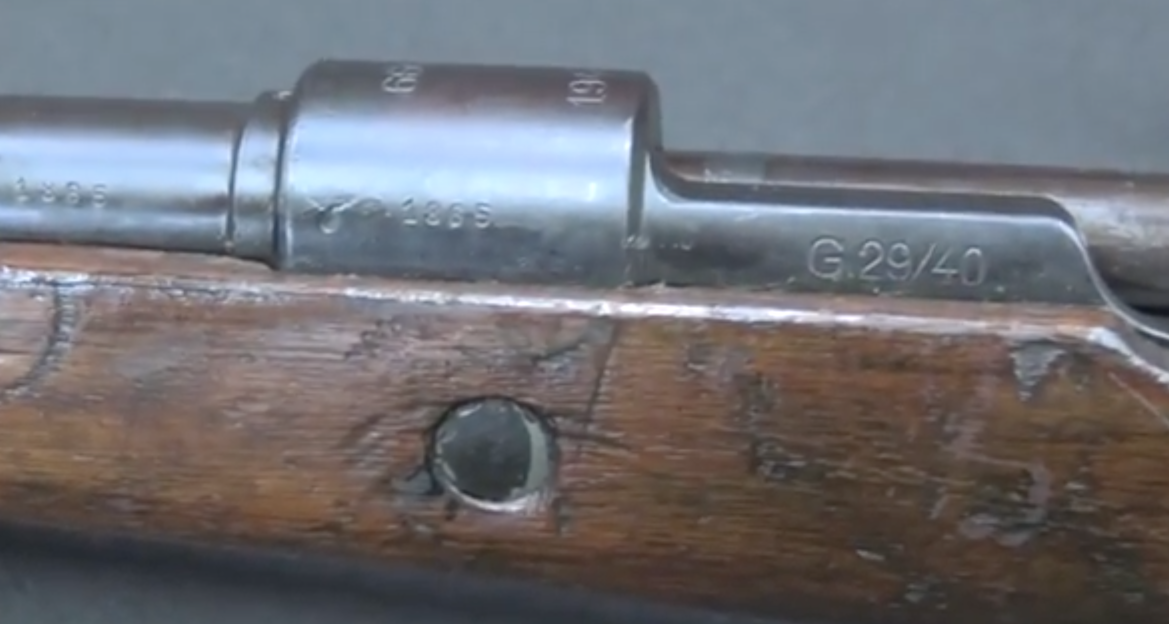
RIA: Gewehr 29/40 Mauser
Over the next couple weeks we will be looking at several Polish firearms, and the first one is today: the G29/40. When German forces overran the arms factory in Radom, Poland, they captured in nearly […]
Submachine Guns
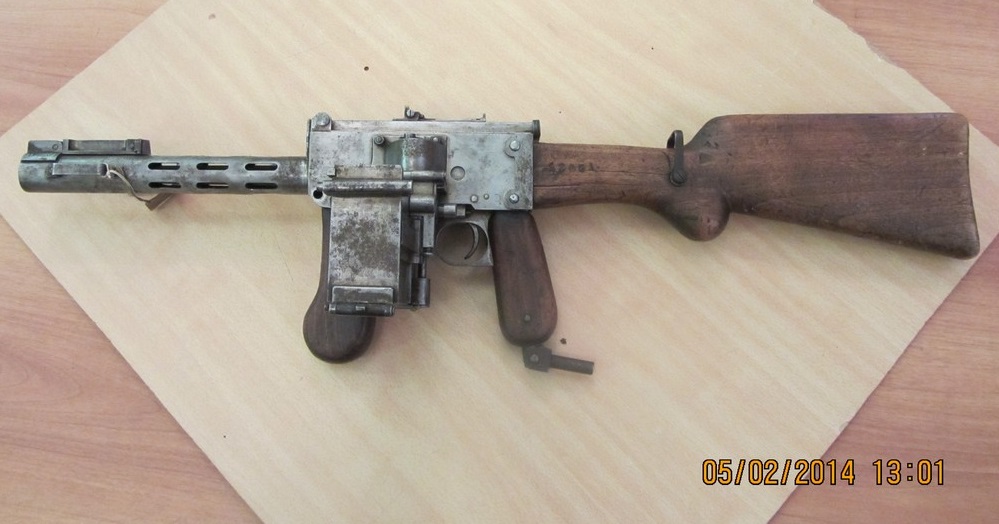
Experimental German 08/18 Maxim SMG
From Max Popenker, we have a set of photos of a very funky German submachine gun from the first world war (presumably 1918). The weapon is currently in possession of the weapon design department at […]

Book review
Book Review: International Arms Review 1
We’ve all seen the books of compiled articles at gun shows, printed by Gun Digest or other sundry magazines. I usually don’t give them a second glance, at least until now. I had a friend […]
One in .32 ACP loaded with silvertips would still be a reasonable choice.
“proprietary 7mm cartridge”
Dimensions and photos: http://www.municion.org/7mm/7Baer.htm
“.32 ACP”
В.Е. Маркевич (“Ручное огнестрельное оружие”) states that:
-initially Bär pistol was designed for .320 revolver cartridge (black-powder, lead bullet)
-later (about 1910) 6,35mm Browning (.25 Auto) and 7,65mm Browning (.32 Auto) versions were created
I suspect that В.Е. Маркевич might confuse .320 revolver with 7mm Bär (considering 6.62mm bullet diameter from municion it would be .261″), but I can’t prove or disprove that info about .320 revolver is false.
There were a plethora of .25 ACP “non-automatic” pocket pistols around prior to WW1. They mainly sold to people who liked the new .25 cartridge but didn’t trust the reliability of the “new-fangled” self-loading pistols.
The vast majority were small revolvers, usually with folding triggers. Some even had folding pistol grips working much like the stock of the (much later) paratrooper version of the French MAS 36 7.5mm bolt-action rifle; a hollow U-cross-section stamping that folded up under the action.
Most such revolvers had been in production for decades, chambered in the 5.5mm Velo-Dog round. (“Velo-Dog”= “velocipede’ anti-dog”, i.e., a pistol carried by bicyclists to protect themselves from irritable canines.) Power-wise, they were in the range of a .22 Long standard-velocity rimfire, so the .25 round was actually an improvement in the power department.
The Bär wasn’t the only “non-revolver” type pistol. There were also the Regnum aka Reform, patented by August Schuler in 1906;
http://4.bp.blogspot.com/-00wGEUrwcz4/ULKZDRDTdNI/AAAAAAAAAUM/8i9JmU37Z7E/s1600/ReformePistol.jpg
And the Tomma, with was basically the same design with a concealed hammer like a S&W Safety Hammerless revolver;
http://picturearchive.gunauction.com/2994232231/12733913/1403bc1.jpg_thumbnail0.jpg
These of course had four full barrels and were even more like a derringer than the Bär.
The same basic concept showed up much later, in the Feather Industries Guardian Angel “derringer”, which was actually more like a cross between the Bär and the Tomma, except in either .22 LR or .22 WMR.
There is also this very odd item from Russia;
http://world.guns.ru/userfiles/images/handguns/russia/hg156/1287755053.jpg
Which I suspect is one of those “silent” or “piston-cartridge” guns that show up in the “Q Sections” of various cloak-and-dagger agencies.
According to people I’m acquainted with who have done that sort of work, they generally avoided such gadgets like the plague, as they basically advertised “Hey, I was shot by a spy!” when used. Their SOP was to acquire weapons that were common in the OPAREA they were in, use them, and then dispose of them. Thus leaving the local authorities to assume the stiff had gotten crossways of some local bad actor and gotten the usual result of same.
cheers
eon
“Which I suspect”
You linked photo of Russian МСП (MSP) silent pistol
“they generally avoided such gadgets like the plague”
MSP fires standard 7.62 bullet (of 7.62×39 cartridge) but with much lower muzzle velocity
http://world.guns.ru/ammunition/russian-special-cartridges-e.html
So the effect on victim should be similar to SKS or AK fired from long distance