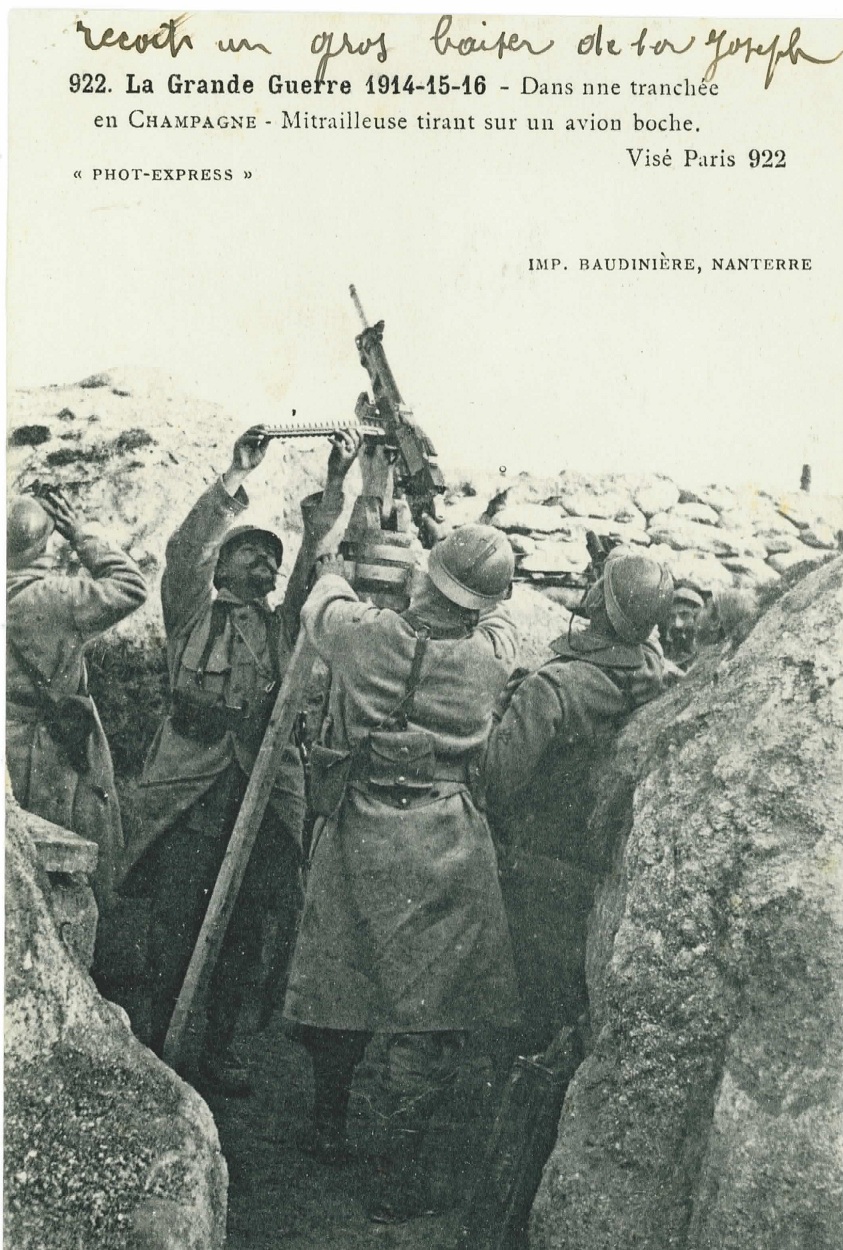
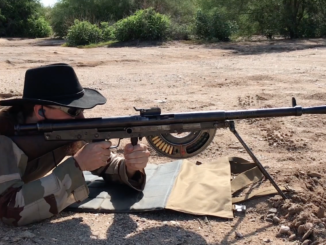
I don’t think that’s a standard-issue tripod – more like something built for an 8-foot-tall surveyor. Also, note the feed strip box on the ground below the gunner.
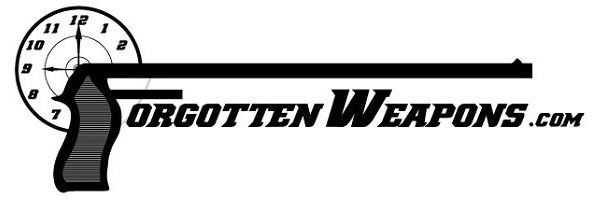
I don’t think that’s a standard-issue tripod – more like something built for an 8-foot-tall surveyor. Also, note the feed strip box on the ground below the gunner.
© 2026 Forgotten Weapons.
Site developed by Cardinal Acres Web Development.
It is not too surprising to see such a set-up for high-angle AA fire against low-flying aircraft — after all, necessity is the mother of invention, and there were many such improvised mounts devised for light AA applications in the field during WWI and WWII.
A case in point is the method developed by German Army units on the Eastern Front to address low-level attacks by IL-2 Sturmoviks and the like. The assistant gunner of an MG-34 or MG-42 GPMG team would support the weapon across the back of his shoulders at the point where the bipod was attached while the gunner traversed and fired the weapon. Very noisy and not a little disconcerting for the AG, to say the least, but nevertheless fairly effective against enemy aircraft when used en masse.
It may come as a surprise for many otherwise in the know, but this method of improvised AA defence was taught to the soldiers of more than one modern army during the period from after the Second World War through the 1990’s and later. I distinctly remember practising this procedure on more than one occasion with an FN MAG58 7.62mm GPMG during the late 1970’s.
Many of the losses among USAF, USN, AFRVN and ARVN aircraft and helicopters during low-level COIN operations during the Vietnam War could probably be attributed to this technique of last-ditch AA defence.
Your final paragaph: “The golden BB”.