
People tend to think of quick-detach slings as the stuff of nylon and fast-ex buckles, but these things have actually been around for a long time. One example is this Japanese Arisaka sling. Using two wire clips to attach to sling swivels, it is very quick and easy to detach from the rifle. We don’t know exactly who these were intended for, but they ended up being used on a wide variety of rifles. In particular, they appear to have been fairly popular on the Type 2 Paratrooper model of the Arisaka – although they were made before that rifle was adopted.
Semiauto pistol
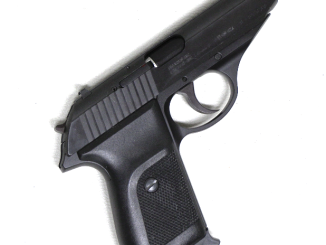
Sig P230JP: A Special Pistol for the Japanese Police
The Japanese national police decided to replace their old Model 60 S&W revolvers in 1995. While traditionalist elements liked the use of a non-threatening compact revolver, others advocated for a modern sidearm – essentially a […]

Book review
Book Review: China’s Small Arms of the 2nd Sino-Japanese War
I picked up a copy of this book a couple years ago when Bin Shih first published it, but by the time I got around to doing a review it had sold out – so […]
Prototype
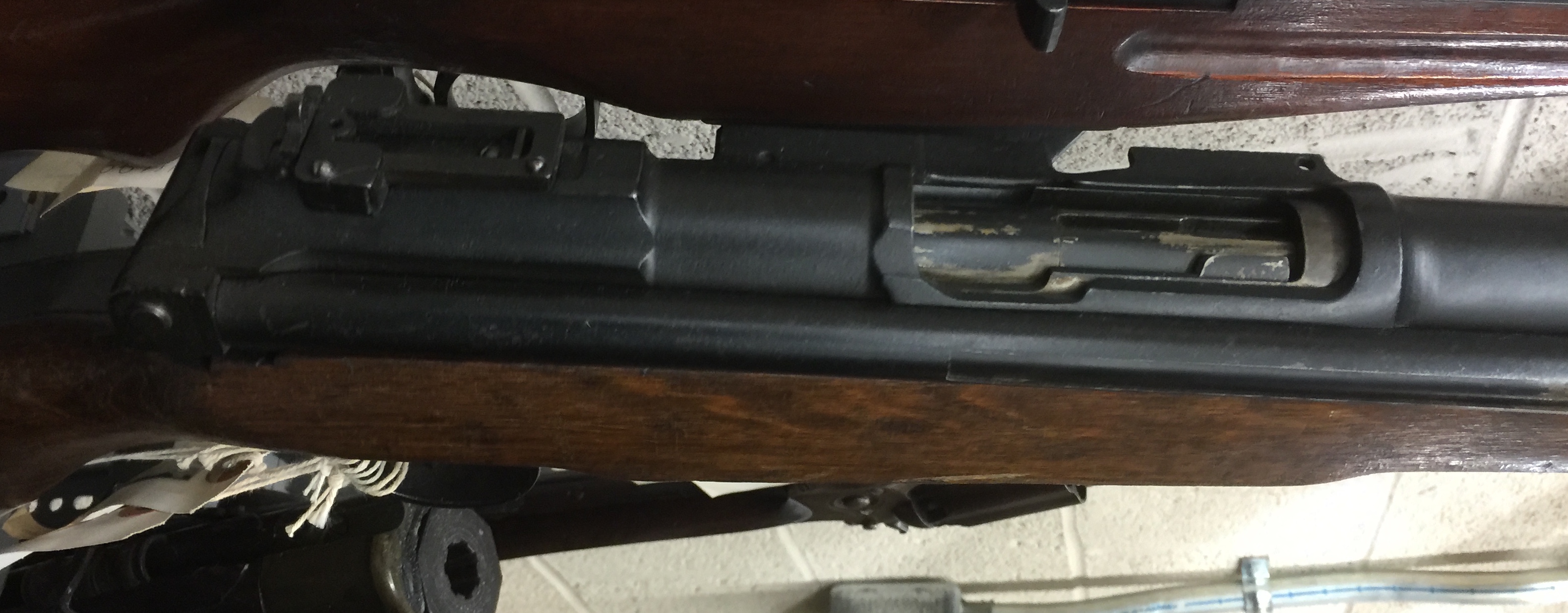
Mystery Japanese Semiauto
While in the Smithsonian gun room, I noticed a semi auto Japanese rifle of a type I have not seen reference to before. It is definitely Japanese, judging from elements like the split buttstock and […]
Looks like a clever Joe could just get some pliers and bend it down just enough that it would hold a little better under spring tension.
Ian is the actual sling rubber impregnated webbing?
I always considered the web sling for the M1 Garand from WW2 to be a fairly quick detach sling.
How about Hi-Speed Lo-Drag in 1890s? QD rear sling clip on the Mauser Gew 98 (similar used on German GPMGs)?
A QD sling would make sense on the Type 2, due to its takedown arrangement.
However, I seriously doubt that using it as a shooting sling would improve accuracy, as the Type 2’s two-section setup would probably be even more vulnerable to the barrel being pulled to one side by sling tension than a conventional “one-piece” barrel/receiver structure would be.
cheers
eon
I am not very well-versed in the infantry tactics of WWII but AFAIK
a) I am not sure that using a shooting sling was ever taught by the Japanese Army
b) I am relatively sure that even American troops did not use their sling to stabilize their guns all that often.